Editorial
Resumen
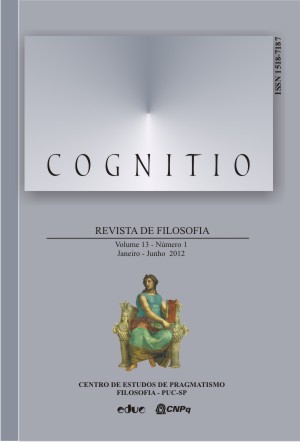
Cognitio tem sido considerada uma das mais importantes publicações acerca do pragmatismo clássico e suas conexões com o pragmatismo e filosofia contemporâneos, principalmente no plano internacional, conforme testemunhos frequentes dos mais renomados estudiosos dessa área de pesquisa. As submissões continuamente recebidas desses estudiosos e os trabalhos já publicados em seus treze anos de vida, completáveis ao fim de 2012, atestam a irretorquível qualidade da revista. Certamente os consagrados nomes que têm figurado e já figuraram em edições passadas são a prova cabal de merecidos respeito acadêmico e seriedade editorial de Cognitio.Hoje espraiados por todos os grandes centros de pesquisa do mundo, os estudos que têm por eixo o pragmatismo clássico e suas derivações teóricas transcendem o que tradicionalmente se caracterizou como filosofia norte-americana, exceto quando se faz menção às origens da doutrina, de fato oriunda dos Estados Unidos. Praticamente todos os países europeus têm seus centros de pesquisa na área e, já de longa data, promovem eventos internacionais e publicações que congregam estudiosos de pragmatismo. No Canadá, América Latina e Japão também se desenvolvem núcleos importantes de estudos correlacionados ao pragmatismo. Os Encontros Internacionais de Pragmatismo, organizados pelo Centro de Estudos de Pragmatismo da PUC/SP, têm igualmente recebido pesquisadores seniores de diversas partes do mundo, assim como jovens acadêmicos, mestrandos e doutorandos estrangeiros que submetem suas comunicações ao evento. Este espraiamento do interesse pelo pragmatismo se deve, pode-se conjecturar, às próprias características de sua constituição teórica, a saber, suas múltiplas interfaces abertas a uma miríade de temas associados a uma substancial amplitude de problemas de filosofia. Não se pode penetrar com profundidade no arcabouço conceitual da área sem um sério estudo de história da filosofia – ignorá-la é incorrer em interpretações reducionistas e, principalmente, desconsiderar o diálogo heurístico que o conhecimento dos clássicos pode proporcionar com a contemporaneidade.Em nome desse diálogo, Cognitio tem apresentado ensaios que apontam para a diversidade temática afeita à sua área específica de pesquisa, conforme bem ilustra esse volume 13(1) ao trazer trabalhos sobre James e Wittgenstein, Dewey e Foucault, Brandom e Hegel, Marx e Pragmatismo, e Lógica e Semiótica, redundando aqui com o que, com propriedade, já menciona a orelha da edição.Cremos que as interfaces teóricas proporcionadas pelo estudo do pragmatismo clássico tendem a se ampliar, pelo que temos observado nas pesquisas mais recentes e no interesse de pesquisadores na área, fazendo as conexões do pragmatismo com a semiótica e adentrando de modo original uma releitura de velhos e novos problemas de filosofia.
Ivo A. Ibri
Editor
Métricas