Comportamentos autolesivos em adolescentes e apego parental
uma revisão de escopo
DOI:
https://doi.org/10.23925/2594-3871.2025v34i2p270-293Palavras-chave:
Adolescente, Autolesão, Comportamento Autodestrutivo, Apego, Relação ParentalResumo
O objetivo desta revisão de escopo foi investigar as relações entre comportamentos autolesivos na adolescência e o apego entre pais e filhos. Para isso, foram incluídos artigos relacionados com o tema em inglês, português e espanhol publicados em qualquer período, com amostras entre 10 e 19 anos. Foram excluídos estudos em que a autolesão estava relacionada com transtornos de neurodesenvolvimento; não puderam ser recuperados; eram estudos de caso, revisão de literatura ou artigos teóricos. As buscas foram feitas em seis bancos de dados (Embase, Lilacs, PubMed, PsycNET, SciELO, Web of Science) e resultaram na seleção de 13 artigos. Para extrair e analisar os resultados, foi elaborado e preenchido um instrumento de coleta de dados com informações gerais sobre a publicação dos artigos, objetivos, metodologias, amostras, resultados, conclusões e um checklist para avaliar a qualidade e vieses das evidências. Os dados foram categorizados, discutidos e uma matriz de síntese foi elaborada. Esta revisão identificou consistentes relações diretas ou mediadas entre o comportamento autolesivo na adolescência e o apego parental, ainda que os caminhos estatísticos desta relação e as influências relacionadas ao gênero não estejam claros.
Downloads
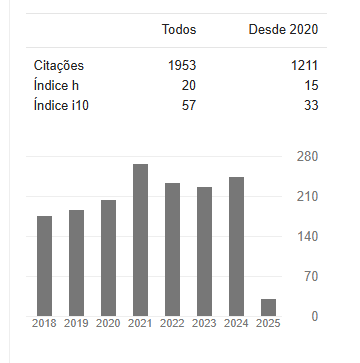
Métricas
Referências
Adrian, M., Berk, M. S., Korslund, K., Whitlock, K., McCauley, E., & Linehan, M. (2018). Parental validation and invalidation predict adolescent self-harm. Professional psychology: research and practice, 49(4), 274. https://doi.org/10.1037/pro0000200
American Psychiatric Association. (2014). DSM-5: Manual diagnóstico e estatístico de transtornos mentais. Artmed Editora.
Armsden, G. C., & Greenberg, M. T. (1987). The inventory of parent and peer attachment: Individual differences and their relationship to psychological well-being in adolescence. Journal of youth and adolescence, 16(5), 427–454. https://doi.org/10.1007/BF02202939
Balan, R., Dobrean, A., Roman, G. D., & Balazsi, R. (2017). Indirect effects of parenting practices on internalizing problems among adolescents: The role of expressive suppression. Journal of Child and Family studies, 26, 40–47. https://doi.org/10.1007/s10826-016-0532-4
Bowlby, J. (1969). Attachment and loss, Vol. 1: Attachment. New York: Basic Books.
Brenning, K., Soenens, B., Braet, C., & Bosmans, G. (2011). An adaptation of the Experiences in Close Relationships Scale-Revised for use with children and adolescents. Journal of Social and Personal Relationships, 28(8), 1048–1072. https://doi.org/10.1177/0265407511402418
Brereton, A., & McGlinchey, E. (2020). Self-harm, emotion regulation, and experiential avoidance: A systematic review. Archives of suicide research, 24(sup1), 1-24. https://doi.org/10.1080/13811118.2018.1563575
Cassels, M., Baetens, I., Wilkinson, P., Hoppenbrouwers, K., Wiersema, J. R., Van Leeuwen, K., & Kiekens, G. (2019). Attachment and non-suicidal self-injury among young adolescents: The indirect role of behavioral problems. Archives of suicide research, 23(4), 688-696. https://doi.org/10.1080/13811118.2018.1494651
Cerutti, R., Zuffianò, A., & Spensieri, V. (2018). The role of difficulty in identifying and describing feelings in non-suicidal self-injury behavior (NSSI): associations with perceived attachment quality, stressful life events, and suicidal ideation. Frontiers in psychology, 9, 318. https://doi.org/10.3389/fpsyg.2018.00318
Cooke, A., Smith, D., & Booth, A. (2012). Beyond PICO: the SPIDER tool for qualitative evidence synthesis. Qualitative health research, 22(10), 1435–1443. https://doi.org/10.1177/1049732312452938
Cozby, P. C. (2003). Métodos de pesquisa em ciências do comportamento. São Paulo: Editora Atlas.
Dalbem, J. X., & Dell’Aglio, D. D. (2005). Teoria do apego: bases conceituais e desenvolvimento dos modelos internos de funcionamento. Arquivos brasileiros de psicologia, 57(1), 12–24. http://pepsic.bvsalud.org/scielo.php?pid=S1809-52672005000100003&script=sci_abstract
Dattilio, F. M. (2011). Manual de terapia cognitivo-comportamental para casais e famílias. Artmed Editora.
Dorol, O., & Mishara, B. L. (2021). Systematic review of risk and protective factors for suicidal and self-harm behaviors among children and adolescents involved with cyberbullying. Preventive medicine, 152, 106684. https://doi.org/10.1016/j.ypmed.2021.106684
Farkas, B. F., Takacs, Z. K., Kollarovics, N., & Balazs, J. (2024). The prevalence of self-injury in adolescence: a systematic review and meta-analysis. European Child & Adolescent Psychiatry, 33(10), 3439-3458. https://doi.org/10.1007/s00787-023-02264-y
Fong, Z. H., Loh, W. N. C., Fong, Y. J., Neo, H. L. M., & Chee, T. T. (2022). Parenting behaviors, parenting styles, and non-suicidal self-injury in young people: a systematic review. Clinical child psychology and psychiatry, 27(1), 61–81. https://doi.org/10.1177/13591045211055071
Friedberg, R. D. (2006). A cognitive-behavioral approach to family therapy. Journal of Contemporary Psychotherapy, 36(4), 159–165. https://doi.org/10.1007/s10879-006-9020-2
Fliege, H., Lee, J. R., Grimm, A., & Klapp, B. F. (2009). Risk factors and correlates of deliberate self-harm behavior: A systematic review. Journal of psychosomatic research, 66(6), 477–493. https://doi.org/10.1016/j.jpsychores.2008.10.013
Gillies, D., Christou, M. A., Dixon, A. C., Featherston, O. J., Rapti, I., Garcia-Anguita, A., ... & Christou, P. A. (2018). Prevalence and characteristics of self-harm in adolescents: meta-analyses of community-based studies 1990–2015. Journal of the American Academy of Child & Adolescent Psychiatry, 57(10), 733-741. https://doi.org/10.1016/j.jaac.2018.06.018
Glazebrook, K., Townsend, E., & Sayal, K. (2015). The role of attachment style in predicting repetition of adolescent self-harm: A longitudinal study. Suicide and Life-Threatening Behavior, 45(6), 664-678. https://doi.org/10.1111/sltb.12159
Goodman, R. (2001). Psychometric properties of the strengths and difficulties questionnaire. Journal of the American Academy of Child & Adolescent Psychiatry, 40(11), 1337–1345. https://doi.org/10.1097/00004583-200111000-00015
Gomes, A. D. A. (2011). A teoria do apego no contexto da produção científica contemporânea [Dissertação de mestrado, Universidade Estadual Paulista]. Repositório Institucional UNESP. https://repositorio.unesp.br/handle/11449/97442.
Guerreiro, D. F., & Sampaio, D. (2013). Comportamentos autolesivos em adolescentes: uma revisão da literatura com foco na investigação em língua portuguesa. Revista portuguesa de saúde pública, 31(2), 213–222. https://doi.org/10.1016/j.rpsp.2013.05.001
Gutierrez, P. M., Osman, A., Barrios, F. X., & Kopper, B. A. (2001). Development and initial validation of the self-harm behaviour questionnaire. Journal of Personality Assessment, 77(3), 475–490. https://doi.org/10.1207/S15327752JPA7703_08
Hawton, K., Saunders, K. E., & O’Connor, R. C. (2012). Self-harm and suicide in adolescents. The Lancet, 379(9834), 2373–2382. https://doi.org/10.1016/S0140-6736(12)60322-5
Jiang, Y., You, J., Zheng, X., & Lin, M. P. (2017). The qualities of attachment with significant others and self-compassion protect adolescents from non suicidal self-injury. School psychology quarterly, 32(2), 143. https://doi.org/10.1037/spq0000187
Knipe, D., Padmanathan, P., Newton-Howes, G., Chan, L. F., & Kapur, N. (2022). Suicide and self-harm. The Lancet, 399(10338), 1903-1916. https://doi.org/10.1016/S0140-6736(22)00173-8
Khalid, A., Qadir, F., Chan, S. W., & Schwannauer, M. (2018). Parental bonding and adolescents’ depressive and anxious symptoms in Pakistan. Journal of affective disorders, 228, 60–67. https://doi.org/10.1016/j.jad.2017.11.050
Kurock, R., Gruchel, N., Bonanati, S., & Buhl, H. M. (2022). Family climate and social adaptation of adolescents in community samples:
A systematic review. Adolescent Research Review, 7(4), 551-563. https://doi.org/10.1007/s40894-022-00189-2
Lansford, J. E. (2022). Annual Research Review: Cross‐cultural similarities and differences in parenting. Journal of Child Psychology and Psychiatry, 63(4), 466–479. https://doi.org/10.1111/jcpp.13539
Lee, W. K. (2016). Psychological characteristics of self-harming behavior in Korean adolescents. Asian journal of psychiatry, 23, 119-124. https://doi.org/10.1016/j.ajp.2016.07.013
Lim, K. S., Wong, C. H., McIntyre, R. S., Wang, J., Zhang, Z., Tran, B. X., ... & Ho, R. C. (2019). Global lifetime and 12-month prevalence of suicidal behavior, deliberate self-harm and non-suicidal self-injury in children and adolescents between 1989 and 2018: a meta-analysis. International journal of environmental research and public health, 16(22), 4581. https://doi.org/10.3390/ijerph16224581
Liu, Y., Xiao, Y., Ran, H., He, X., Jiang, L., Wang, T., ... & Lu, J. (2020). Association between parenting and non-suicidal self-injury among adolescents in Yunnan, China: a cross-sectional survey. PeerJ, 8, e10493. https://doi.org/10.7717/peerj.10493
Madjar, N., Walsh, S. D., & Harel-Fisch, Y. (2018). Suicidal ideation and behaviors within the school context: Perceived teacher, peer and parental support. Psychiatry research, 269, 185–190. https://doi.org/10.1016/j.psychres.2018.08.045
Mcevoy, D., Brannigan, R., Cooke, L., Butler, E., Walsh, C., Arensman, E., & Clarke, M. (2023). Risk and protective factors for self-harm in adolescents and young adults: An umbrella review of systematic reviews. Journal of psychiatric research, 168, 353-380. https://doi.org/10.1016/j.jpsychires.2023.10.017
Martin, G., & Waite, S. (1994). Parental bonding and vulnerability to adolescent suicide. Acta Psychiatrica Scandinavica, 89(4), 246-254. https://doi.org/10.1111/j.1600-0447.1994.tb01509.x
O’Connor, R. C., Rasmussen, S., Miles, J., & Hawton, K. (2009). Self-harm in adolescents: self-report survey in schools in Scotland. The British Journal of Psychiatry, 194(1), 68–72. https://doi.org/10.1192/bjp.bp.107.047704
Parker, G., Tupling, H., Brown, L.B. (1979). A parental bonding instrument. British journal of medical psychology, 52(1), 1–10. https://doi.org/10.1111/j.2044-8341.1979.tb02487.x
Patton, G. C., Hemphill, S. A., Beyers, J. M., Bond, L., Toumbourou, J. W., McMORRIS, B. J., & Catalano, R. F. (2007). Pubertal stage and deliberate self-harm in adolescents. Journal of the American Academy of Child & Adolescent Psychiatry, 46(4), 508–514. https://doi.org/10.1097/chi.0b013e31803065c7
Reis, M., Tomé, G., Ramiro, L., Gaspar, S., & Matos, M. G. (2020). Understanding risk factors associated with self-harm behavior in adolescents-HBSC. International Journal of Education Humanities and Social Science, 3(1), 79-92.
Peters, M. D., Marnie, C., Tricco, A. C., Pollock, D., Munn, Z., Alexander, L., McInerney, P., Godfrey, C. M., & Khalil, H. (2020). Updated methodological guidance for the conduct of scoping reviews. JBI evidence synthesis, 18(10), 2119-2126. https://doi.org/10.11124/JBIES-20-00167
Roberts, E., Joinson, C., Gunnell, D., Fraser, A., & Mars, B. (2020). Pubertal timing and self-harm: a prospective cohort analysis of males and females. Epidemiology and psychiatric sciences, 29, e170. https://doi.org/10.1017/S2045796020000839
Santangelo, P. S., Koenig, J., Funke, V., Parzer, P., Resch, F., Ebner-Priemer, U. W., & Kaess, M. (2017). Ecological momentary assessment of affective and interpersonal instability in adolescent non-suicidal self-injury. Journal of abnormal child psychology, 45, 1429-1438. https://doi.org/10.1007/s10802-016-0249-2
Sampaio, I. T. A., & Vieira, M. L. (2010). A influência do gênero e ordem de nascimento sobre as práticas educativas parentais. Psicologia: Reflexão e Crítica, 23, 198–207. https://doi.org/10.1590/S0102-79722010000200002
Santens, T., Claes, L., Diamond, G. S., & Bosmans, G. (2018). Depressive symptoms and self-harm among youngsters referred to child welfare: the role of trust in caregiver support and communication. Child abuse & neglect, 77, 155–167. https://doi.org/10.1016/j.chiabu.2018.01.001
Shaughnessy, J. J., Zechmeister, E. B., & Zechmeister, J. S. (2012). Metodologia de pesquisa em psicologia. AMGH Editora.
Tao, Y., Bi, X. Y., & Deng, M. (2020). The impact of parent–child attachment on self-injury behavior: negative emotion and emotional coping style as serial mediators. Frontiers in psychology, 11, 1477. https://doi.org/10.3389/fpsyg.2020.01477
Tatnell, R., Hasking, P., Newman, L., Taffe, J., & Martin, G. (2016). Attachment, emotion regulation, childhood abuse and assault: examining predictors of NSSI among adolescents. Archives of suicide research, 21(4), 610-620. https://doi.org/10.1080/13811118.2016.1246267
Tatnell, R., Kelada, L., Hasking, P., & Martin, G. (2013). Longitudinal analysis of adolescent NSSI: The role of intrapersonal and interpersonal factors. Journal of abnormal child psychology, 42, 885-896. https://doi.org/10.1007/s10802-013-9837-6
Target, M., Fonagy, P., & Shmueli-Goetz, Y. (2003). Attachment representations in school-age children: The development of the Child Attachment Interview (CAI). Journal of child psychotherapy, 29(2), 171–186. https://doi.org/10.1080/0075417031000138433
Victor, S. E., Hipwell, A. E., Stepp, S. D., & Scott, L. N. (2019). Parent and peer relationships as longitudinal predictors of adolescent non-suicidal self-injury onset. Child and adolescent psychiatry and mental health, 13(1), 1-13. https://doi.org/10.1186/s13034-018-0261-0
Wang, Y., Zhang, M., & Chen, H. (2019). Self-Injury Among Left-Behind Adolescents in Rural China: The Role of Parental Migration and Parent–Child Attachment. Frontiers in psychology, 9, 2672. https://doi.org/10.3389/fpsyg.2018.02672
Wichstrøm, L. (2009). Predictors of non-suicidal self-injury versus attempted suicide: similar or different?. Archives of Suicide Research, 13(2), 105-122. https://doi.org/10.1080/13811110902834992
Wilhelm, P., & Schoebi, D. (2007). Assessing mood in daily life: structural validity, sensitivity to change, and reliability of a short-scale to measure three basic dimensions of mood. European Journal of Psychological Assessment, 23, 258–267. https://doi.org/10.1027/1015-5759.23.4.258
Williams, A. J., Jones, C., Arcelus, J., Townsend, E., Lazaridou, A., & Michail, M. (2021). A systematic review and meta-analysis of victimisation and mental health prevalence among LGBTQ+ young people with experiences of self-harm and suicide. PloS one, 16(1), e0245268. https://doi.org/10.1371/journal.pone.0245268
Wong, T. K., Konishi, C., & Kong, X. (2021). Parenting and prosocial behaviors: A meta-analysis. Social Development, 30(2), 343-373. https://doi.org/10.1111/sode.12481
Woo, J., Wrath, A. J., & Adams, G. C. (2020). The relationship between attachment and self-injurious behaviors in the child and adolescent population: a systematic review of the literature. Archives of suicide research, 26(2), 406-427. https://doi.org/10.1080/13811118.2020.1804024
World Health Organization. (2020, 19 de outubro). Adolescent health and development* [Question & answer]. https://www.who.int/news-room/questions-and-answers/item/adolescent-health-and-
development
World Health Organization. (2025). Suicide worldwide in 2021: global health estimates. World Health Organization.
World Health Organization. (2023). Global Accelerated Action for the Health of Adolescents (AA-HA!): guidance to support country implementation. World Health Organization.
Downloads
Publicado
Como Citar
Edição
Seção
Licença
Copyright (c) 2023 Lucas Miranda Parente de Araújo, Isabela Pizzarro Rebessi, Carmem Beatriz Neufeld

Este trabalho está licenciado sob uma licença Creative Commons Attribution 4.0 International License.